
BJJ and Self-Defense: Why Brazilian Jiu-Jitsu Works in the Real World
(Jewel JiuJitsu — Fayetteville, NC)
When most people think “self-defense,” they picture fast punches, flashy kicks, and movie-style fight scenes. But real-life situations are rarely clean, predictable, or fair. That’s exactly why Brazilian Jiu-Jitsu (BJJ) has earned a reputation as one of the most practical self-defense systems in the world: it trains you to stay calm, control chaos, and win even when things get close and messy.
At Jewel JiuJitsu in Fayetteville, NC, we teach BJJ in a way that’s effective for everyday people—men and women, beginners and experienced athletes—so you can build confidence and capability without needing to be the biggest or strongest person in the room. Learn more or get started here: https://jeweljj.com/
Why BJJ is one of the best self-defense martial arts
A lot of fights end up in the clinch or on the ground. Whether it’s a shove, a tackle, or someone grabbing you in close range, the “standing-only” plan falls apart fast if you’ve never trained what happens next.
BJJ focuses on:
Control over damage (you don’t have to “knock someone out” to stop the threat)
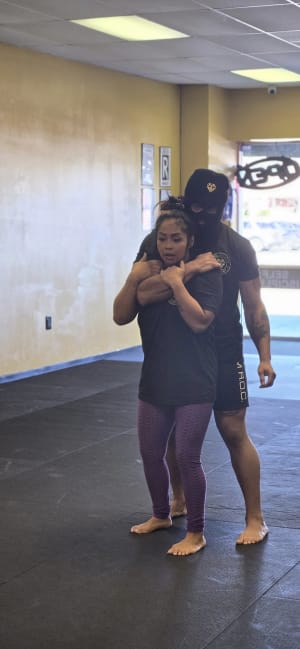
Escapes from bad positions (bottom mount, headlocks, grabs, pinned against a wall)
Leverage and technique (so size and strength matter less)
Composure under pressure (you learn to breathe, think, and act instead of panic)
In self-defense, the ability to control someone—especially long enough to escape—is a huge advantage.
Self-defense isn’t a “fight”—it’s a problem to solve
A key mindset shift BJJ gives you is this: self-defense is not about proving toughness. It’s about making smart decisions under stress.
At Jewel JiuJitsu, we emphasize principles that actually matter in real situations:
Awareness and avoidance first (best fight is the one you don’t have)
Distance management (don’t let someone close the gap for free)
Protect yourself and create an exit
Control the threat when you can’t immediately escape
BJJ shines because it gives you options when things aren’t ideal—when someone is bigger, aggressive, and already close.
What BJJ teaches that most people never practice
1) How to escape from worst-case positions
Most untrained people have never practiced getting out from under someone. In a real confrontation, being pinned is terrifying. BJJ trains you to escape mount, side control, headlocks, and grabs through repeated drilling—so your body knows what to do when adrenaline hits.
2) How to break grips and stop control
A lot of self-defense begins with someone grabbing you—wrist, shirt, hair, or around the waist. BJJ gives you a deep understanding of grip fighting and body positioning, so you’re harder to hold and easier to free.
3) How to control without “going too far”
One underrated benefit of BJJ is that it teaches measured responses. Not every situation calls for maximum force. BJJ lets you control someone, hold them in place, or disengage safely—especially important if you’re trying to protect yourself while avoiding unnecessary harm.
4) How to stay calm in pressure
In BJJ, you get used to discomfort in a safe environment. Someone is on top of you. Your breathing is challenged. You feel stuck—then you learn how to solve it. That kind of training builds the calm confidence that makes a real difference when your heart rate spikes.
Why BJJ is ideal for smaller people and beginners
You don’t need to be explosive, flexible, or naturally athletic to benefit from BJJ. In fact, BJJ was designed around the idea that technique can overcome size.
That doesn’t mean strength doesn’t matter—of course it does. But BJJ equips you with tools that work even when you’re not the stronger person:
Frames and structure to create space
Angles and leverage to off-balance someone
Escapes that rely on positioning, not power
Submissions that end a threat when necessary
At Jewel JiuJitsu in Fayetteville, NC, we help beginners build skill step-by-step, starting with fundamentals that translate to real self-defense.
What about striking? Does BJJ still help?
Yes—because BJJ teaches you how to deal with the part most people fear: close contact.
Even if strikes are involved, BJJ helps you:
Close distance safely or create distance to leave
Tie someone up so they can’t hit effectively
Control arms and posture
Get back to your feet when you fall or get tackled
In real life, things can happen fast. BJJ gives you a strong base for what to do when the fight becomes a grappling situation—whether you planned for it or not.
(Important note: self-defense always depends on context—environment, legal considerations, and your ability to escape. Training helps you make better decisions under stress.)
The biggest self-defense benefit: confidence you’ve earned
There’s a difference between “I hope I could handle myself” and “I’ve trained this.”
BJJ builds real confidence because you:
Train against resistance
Practice with live partners
Learn what works and what doesn’t
Develop timing and control
That confidence carries into daily life—better posture, better awareness, less fear, and a clearer sense of boundaries.
Train self-defense the right way at Jewel JiuJitsu (Fayetteville, NC)
If you’re serious about self-defense, you need more than theory. You need reps, coaching, and a gym culture that trains smart. At Jewel JiuJitsu in Fayetteville, NC, we help students build real-world confidence through fundamentals-first training that scales for beginners and continues to challenge you as you level up.
Ready to start? Visit our website and come train with us: https://jeweljj.com/