
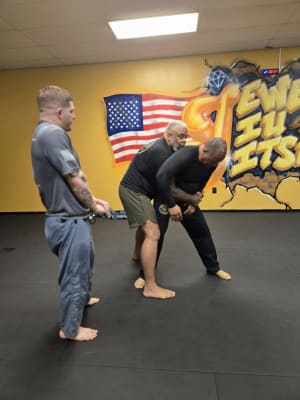
How Wrestlers Can Benefit from Brazilian Jiu-Jitsu at Jewel JiuJitsu (Fayetteville, NC)
If you’re a wrestler, you already have what most new Jiu-Jitsu students spend months trying to build: toughness, pressure, balance, and the ability to keep working when you’re tired. Brazilian Jiu-Jitsu (BJJ) doesn’t replace wrestling—it completes it. At Jewel JiuJitsu in Fayetteville, NC, we see wrestlers level up fast because the two arts pair perfectly. And if you’ve ever felt like “I can take anyone down, but then what?”—BJJ is the answer.
If you’re ready to add submissions, control, and a deeper ground game to your skillset, start training here: https://jeweljj.com/
Wrestling Gives You the Engine—BJJ Gives You the Finish
Wrestling is built on takedowns, control, and pinning. BJJ is built on control too—but with an expanded goal: dominant positions that lead to submissions.
That means wrestlers often enter BJJ with an advantage in:
Driving pressure and top control
Scrambling and staying dangerous in transitions
Balance, posture control, and base
Conditioning and competitive intensity
Then BJJ adds what wrestling doesn’t emphasize as much:
Submissions (chokes and joint locks)
Guard work (attacking and passing from positions wrestling doesn’t use)
Finishing mechanics on the ground
Escapes that don’t rely only on explosiveness
1) You’ll Learn How to Be Safe in Positions Wrestling Doesn’t Teach
A lot of wrestlers feel “comfortable” on top—and for good reason. But in BJJ, certain habits can get you caught:
Leaving your neck exposed while driving forward
Posting an arm without structure (hello, armbars)
Staying too square inside someone’s guard
Giving up back exposure in scrambles
BJJ teaches you how to apply wrestling pressure without handing out submissions. You keep your aggression—just with better awareness and positioning.
2) You’ll Become a Nightmare on Top With BJJ Passing
Wrestlers already understand pressure. When you combine that with BJJ guard passing, it becomes a real problem for training partners.
In BJJ, passing isn’t just “get around the legs.” It’s:
Clearing frames
Winning inside control
Smashing hips and isolating limbs
Progressing to side control, mount, and back control
At Jewel JiuJitsu, we’ll help you translate your riding skills into real BJJ systems—so you’re not just controlling… you’re advancing.
3) Your Scramble Skills Become Submission Opportunities
Wrestling scrambles are fast, chaotic, and exhausting—exactly the kind of moments that decide matches. BJJ takes those same scramble moments and teaches you how to turn them into:
Front headlock chokes
Back takes to rear chokes
Arm traps and transitions to submissions
Control sequences that slow the opponent down
Instead of “scramble to win position,” you’ll learn “scramble to win position and finish.”
4) You’ll Add a Full Guard Game (The Missing Chapter for Most Wrestlers)
Wrestling doesn’t have a guard. BJJ does.
That’s huge—because a wrestler who learns how to:
Stay safe and break posture in guard
Stand up correctly without getting submitted
Pass guard with structure
Attack from bottom when needed
…becomes far more complete.
Even if you prefer top control, learning guard makes you harder to neutralize. And if you ever end up on your back, you’ll have a plan besides “bench press and explode.”
5) BJJ Improves Injury Resilience and Body Control
Wrestling is hard on the body—especially the neck, shoulders, knees, and lower back. BJJ, trained smart, can help you build:
Better joint awareness
Controlled movement under pressure
Safer training intensity (you can tap and reset)
Technical escapes that reduce strain
At Jewel JiuJitsu, we focus on technical development and controlled sparring, so you can train hard while protecting longevity.
6) You Get Real-World Self-Defense Benefits Without Losing Your Edge
Wrestlers are already strong in real-world scenarios because takedowns and top control matter. BJJ adds:
How to control without striking damage
How to finish a fight with a choke (without needing to “win a scramble”)
How to escape bad positions if someone ends up on top
It’s practical, pressure-tested, and pairs perfectly with the grappling mindset wrestlers already have.
What to Expect When a Wrestler Starts BJJ
Most wrestlers go through a predictable (and totally normal) learning curve:
Week 1: “I’m smashing people… why am I getting choked?”
Week 2–4: “Okay, posture and neck safety matter.”
Month 2–3: “Now I’m passing guards and staying safe.”
Month 4+: “I’m controlling, advancing positions, and finishing.”
If that sounds like a journey you’re ready for, you’ll fit in great here.
Train BJJ in Fayetteville, NC at Jewel JiuJitsu
If you’re a wrestler wanting to become more complete, Brazilian Jiu-Jitsu is the best next step—and Jewel JiuJitsu in Fayetteville, NC is the place to do it.
Whether you’re in-season, off-season, competing, coaching, or just wanting a new challenge, we’ll help you apply your wrestling strengths while building a dangerous submission game.
Start training with us: https://jeweljj.com/
Quick FAQ
Is BJJ good for wrestlers in the off-season?
Yes—BJJ is one of the best ways to keep grappling sharp while adding new skills like submissions and guard passing.
Will BJJ mess up my wrestling style?
Not if trained correctly. Good coaching helps you keep your wrestling strengths and add BJJ skills without creating bad habits.
Do I need experience to start?
No. Wrestlers tend to progress quickly, but our classes are built for beginners too.
If you want, I can also write a second version aimed specifically at high school wrestlers, or one geared toward college-level/advanced competitors (different tone, different examples, same Jewel JiuJitsu branding).